Search-a-brandPowered by BRANDSMITHS
Search-a-brand assists you in researching, choosing and building a brand for your company, service or product. Try it out and search with the intended name!
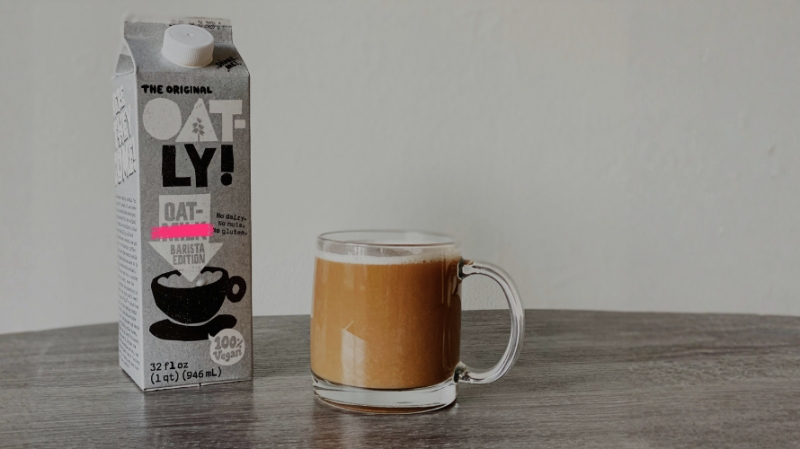
NO USE CRYING OVER SPILT OAT DRINK?
Author: Lucy Aitchison
The UK Supreme Court recently confirmed that Oatly can no longer use the word “milk” in its slogan “POST MILK GENERATION” for oat‑based foods and drinks, as “milk” is a protected designation under retained EU law. The judgment upholds the Court of Appeal’s finding that the trade mark must be invalidated because it uses the term “milk” in relation to a non‑milk product.
In our latest analysis, Lucy Aitchison, trainee solicitor in the IP litigation team explores what ‘designation’ means in this context and considers the limits of the characteristic‑quality carve‑out.
Oatly, Dairy UK and the mark
Oatly AB (“Oatly”) is a Swedish company, known for producing and selling oat-based food and beverages. In April 2021, they registered the trade mark ‘POST MILK GENERATION’ (the “PMG mark”) in classes 29, 30 and 32 in respect of oat-based food and drink products, and class 25 in respect of t-shirts.
In November 2021, Dairy UK Ltd (“Dairy”) (the trade association for the UK dairy industry) sought to invalidate the PMG mark on one of two bases.
The legal framework
The first was that contrary to Section 3(3)(b) of the Trade Marks Act 1994 (“TMA”), the PMG mark should not have been registered as it was ‘of such a nature as to deceive the public’ (i.e., whether the Oatly products contained cow’s milk). This was dismissed on the grounds that the mark was not deceptive, nor was it likely to deceive the average consumer to the extent that their behaviour would be affected. There was no appeal on this point.
The second basis was that the mark had been registered contrary to Section 3(4) of the TMA, which prevents the registration of a mark if its use in the UK would be prohibited by law. The relevant law, Dairy UK argued, was EU Regulation 1308/2013 (the “2013 Regulation”), which is now assimilated law and applies in the UK even post-Brexit.
The 2013 Regulation defines ‘milk’ (along with many other similar terms) and provides that the use of the term ‘milk’ as a “definition, designation or sales description” may only be used for the marketing of agricultural products where they are or contain milk or milk products. Further, no label, commercial document, publicity material or any form of advertising may claim, imply or suggest that a product is a dairy product if it is not. Dairy UK therefore argued that the mark ‘POST MILK GENERATION’ incorporated the term ‘milk’ to refer to non-dairy products in a manner prohibited by the 2013 Regulation and, as a result, was invalid under Section 3(4) of the TMA.
Ground 1
Clearly, the POST MILK GENERATION mark was not being used as the ‘definition’ or ‘sales description’ of the product – Oatly was not selling a ‘POST MILK GENERATION’, it was selling an oat-based alternative to milk. This ground, therefore, turned on the interpretation of ‘designation’ and whether it could be said that the PMG mark was being used as a ‘designation’ for the marketing of non-dairy products.
Oatly argued that ‘designation’ essentially meant the same as ‘name’. As neatly summarised by Lords Hamblen and Burrows in their judgment, Oatly’s argument was essentially that “Milk, cream, butter, cheese and yogurt are all examples of designations … because they are all names of food or drink. In contrast, POST MILK GENERATION is not the name of a product”, and therefore the PMG mark did not fall foul of the 2013 Regulation because it was not using ‘milk’ as a definition, designation or sales description of the product that it was selling – because it is an alternative to milk – not actually ‘milk’.
Dairy UK argued that ‘designation’ had a wide meaning, and so the 2013 Regulation prevented any use of the term ‘milk’ when “referring to” the relevant product (i.e., food or drink).
Ground 2
The 2013 Regulation also provides a carve-out[KW1] [AF2] which permits use of the term ‘milk’ (or related terms) as a designation for products provided the designation is clearly being used to describe a characteristic quality of the product (one example being ‘creamed coconut’, where the term ‘creamed’ describes the characteristic texture of the product).
Oatly argued that this exception applied as the PMG mark was being used to describe a characteristic quality of their product, namely that it was ‘milk-free’.
Dairy UK, by contrast, argued that the PMG mark was an ‘ambiguous phrase’ that did not clearly point to the product being ‘milk-free’ and instead described the type of consumer (a younger generation) that was being targeted.
The decision
In relation to Ground 1, the Supreme Court agreed with Dairy UK and adopted a broad definition of ‘designation’ – elsewhere in the 2013 Regulations, the term ‘designation’ had been used alongside the word ‘names’, and so it naturally followed that the two did not have the same meaning.
It was held that the purpose of the legislation went beyond protecting consumers from being deceived, and instead aimed to preserve the fair conditions of competition within the marketplace.
As a result, the effect of the legislation was that Oatly could not register or use the PMG mark in relation to food or drink, even where it was clear that they were not using the mark to describe their products as ‘milk’, and where consumers would not be deceived. The registration remained valid in class 25 for t-shirts, as the 2013 Regulations only apply to agricultural products.
In relation to Ground 2, the Supreme Court held that it was not clear that the PMG mark was being used to describe a ‘characteristic quality of the product’. Instead, it described the targeted consumers, in particular ‘young consumers … for whom there are … widespread concerns about the production and consumption of milk’. The carve-out [KW3] [AF4] provided in the 2013 Regulations, therefore, did not apply to save the PMG mark.
Wider implications
This decision makes it clear that companies manufacturing and retailing ‘free-from’ goods need to take care when labelling or marketing their products.
The Supreme Court clarified in obiter [KW5] [AF6] that terms such as ‘Milk-Free’ clearly describe a characteristic quality of the product and therefore fall within the carve-out [KW7] [AF8] to the 2013 Regulations, meaning such terms can still be used in relation to free-from products. However, they referred to a previous CJEU judgment [KW9] [AF10] to reiterate the position that under the 2013 Regulations, free-from products cannot otherwise refer to protected terms.
Retailers and manufacturers of free-from goods should now be aware that terms such as ‘oat milk’, ‘plant cheese’ or ‘veggie cheese’ are very likely to be prohibited under this analysis, and any use of a protected term in marketing to refer to the product is likely to face challenge.
About Brandsmiths
Brandsmiths is the law firm for the world’s leading brands. Our specialist IP team works closely with in‑house counsel and brand leaders to ensure product language and creative communications align seamlessly with regulatory requirements.
If you would like strategic guidance on the use of protected terms and direction to help avoid regulatory challenges, request a legal consultation here.





















Brandsmiths is a trading name of Brandsmiths S.L. Limited which is authorised by the Solicitors Regulatory Authority, SRA No: 620298. Founding Partner: Adam Morallee
Privacy and Cookie Policy | Terms and Conditions | Complaint Procedure | Site by: Elate Global